
Best Desi Foods have been part of traditional Indian diets for centuries, long before imported “superfoods” became popular. Today, many health trends promote costly ingredients like quinoa, kombucha, chia seeds, and blueberries. However, several everyday Indian foods provide similar or even better nutrition at a fraction of the price. Understanding Best Desi Foods helps people make healthier choices without relying on expensive imports.
Traditional diets evolved based on local climate, digestion patterns, and nutrient needs. Because of this, Best Desi Foods often support gut health, immunity, and metabolic balance naturally. Instead of replacing them with imported alternatives, it is important to recognise the nutritional strength already present in Indian kitchens.
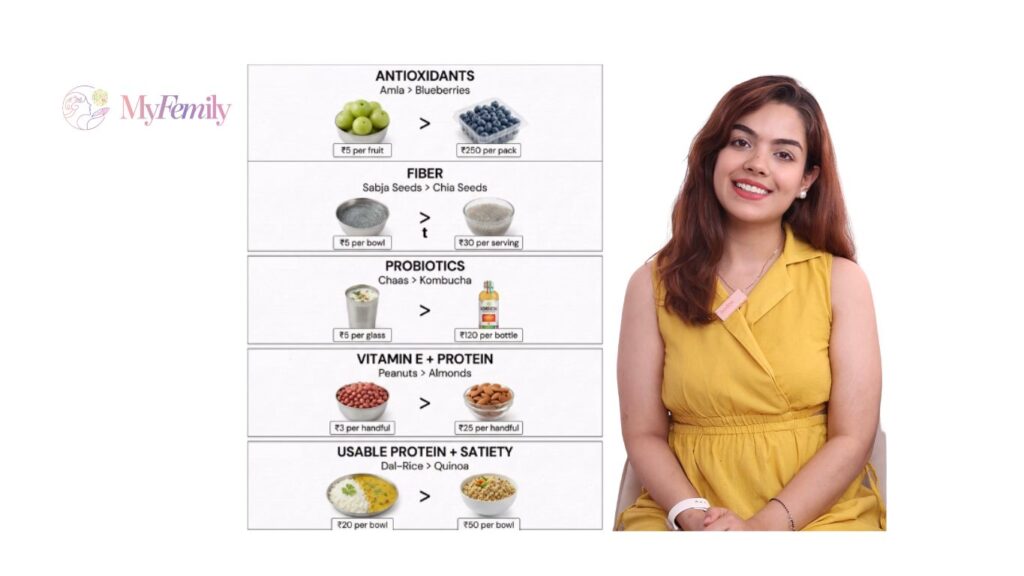
Comparison Table – Best Desi Foods vs Expensive Superfoods
| Best Desi Foods | Popular Imported Alternative | Key Nutritional Benefit | Why Desi Option Wins |
|---|---|---|---|
| Amla | Blueberries | Extremely high Vitamin C | Much cheaper and equally powerful antioxidants |
| Sabja Seeds | Chia Seeds | High dietary fiber | Similar fibre benefits at a lower cost |
| Chaas (Buttermilk) | Kombucha | Natural probiotics | Supports digestion and gut health |
| Peanuts | Almonds | Protein + Vitamin E | Affordable source of healthy fats |
| Dal + Rice | Quinoa | Complete amino acid profile | Balanced protein with better affordability |
Choosing the Best Desi Foods can make nutrition both accessible and sustainable.
Why Traditional Foods Are Nutritionally Powerful
Many Indian foods developed through generations of dietary wisdom. Fermentation, spice combinations, and balanced meals helped improve nutrient absorption. Because of this, Best Desi Foods often support digestion and long-term health more effectively than highly marketed imported products.
Amla vs Blueberries – Antioxidant Power
Amla is one of the richest natural sources of vitamin C. Regular intake supports immune function, collagen production, and antioxidant defence. Among Best Desi Foods, amla stands out because it provides strong antioxidant benefits at a very low cost compared with imported berries.
Sabja Seeds vs Chia Seeds – Fibre Support
Sabja seeds, commonly used in traditional beverages, contain high levels of soluble fibre. This helps improve digestion and regulate bowel movements. As one of the Best Desi Foods for gut health, sabja seeds provide similar fiber advantages as chia seeds but remain much more affordable.
Chaas vs Kombucha – Natural Probiotics
Buttermilk has been part of Indian meals for centuries. It contains beneficial bacteria that support digestion and gut microbiome balance. Many people search for probiotic drinks, yet Best Desi Foods like chaas already provide these benefits naturally.
Peanuts vs Almonds – Affordable Protein
Peanuts offer protein, healthy fats, and vitamin E. While almonds are considered premium nuts, peanuts provide many of the same nutrients at a lower cost. This makes peanuts one of the Best Desi Foods for affordable daily nutrition.
Dal and Rice vs Quinoa – Balanced Protein
Combining lentils with rice creates a complete amino acid profile. This traditional meal provides both carbohydrates and protein, offering long-lasting satiety. As part of Best Desi Foods, dal-rice remains one of the most balanced and economical meals available.
How Myfemily Can Help
Understanding nutrition is easier when guided by structured dietary planning. Myfemily By Nutritionist Saloni helps individuals design balanced meal plans using Best Desi Foods that support digestion, metabolic health, and sustainable nutrition habits.
Learn more here:
https://myfemily.com/
Instead of relying on expensive imported products, Myfemily focuses on optimising traditional foods already available in Indian households.
How Myfemily Educates You to Help Others
Myfemily teaches you how to identify and use Best Desi Foods effectively in everyday meals.
You learn how traditional foods support digestion, immunity, and metabolic health.
This knowledge allows you to guide family members toward affordable and healthier nutrition habits.
Scientific Evidence Supporting Best Desi Foods
Antioxidants in Amla
Amla contains high concentrations of vitamin C and polyphenols, which contribute to antioxidant activity and immune support.
Source:
https://www.ncbi.nlm.nih.gov/pmc/articles/PMC3326920/
Fiber Benefits of Basil Seeds
Basil seeds provide soluble fiber that helps regulate digestion and supports gut health. Fibre-rich Best Desi Foods may also help manage blood sugar levels.
Source:
https://www.ncbi.nlm.nih.gov/pmc/articles/PMC8228369/
Probiotic Benefits of Fermented Dairy
Fermented dairy products, such as buttermilk, contain beneficial bacteria that improve gut microbiota diversity and digestive health.
Source:
https://www.ncbi.nlm.nih.gov/pmc/articles/PMC5622781/
Protein and Healthy Fats in Peanuts
Peanuts contain plant protein and healthy fats that contribute to heart health and satiety when consumed in moderation.
Source:
https://www.ncbi.nlm.nih.gov/pmc/articles/PMC3257681/
Nutritional Value of Lentils
Lentils provide plant protein, fibre, and essential micronutrients, making dal-rice combinations nutritionally balanced meals.
Source:
https://www.ncbi.nlm.nih.gov/pmc/articles/PMC5188421/
Final Thoughts
Healthy eating does not require expensive imported foods. Many traditional ingredients already provide powerful nutrition. By focusing on Best Desi Foods, individuals can maintain balanced diets while keeping meals affordable and culturally relevant.