

Healthy Breakfast Indian is not just the first meal of the day — it is the foundation of your energy, metabolism, hormone balance, and focus. A well-planned morning meal sets the tone for stable blood sugar, controlled cravings, and better digestion throughout the day. Unfortunately, many people either skip breakfast or eat something quick but nutritionally weak, which later leads to fatigue, overeating, and poor health outcomes.
This is where a Healthy Breakfast Indian approach stands out. Traditional Indian breakfasts are designed around local ingredients, climate, digestion patterns, and lifestyle. Unlike imported food habits that often focus on refined cereals or sugary items, Indian breakfasts naturally combine carbohydrates, proteins, fibre, and healthy fats in the right proportions. This makes them far more suitable for Indian bodies, genetics, and daily routines.
Indian food culture has always emphasised balance over restriction. From fermented batters to lentils, curd, vegetables, and healthy fats like ghee, our breakfasts are rooted in both tradition and nutrition science. When structured correctly, a Healthy Breakfast Indian plate can support weight management, hormonal health, muscle recovery, and long-lasting satiety without extreme dieting.
Below are 6 best Healthy Breakfast Indian options, explained with portions, nutritional logic, and real-life benefits.
What Makes a Breakfast Truly Healthy?
A balanced breakfast should include:
- Carbohydrates for energy
- Protein for muscle repair and satiety
- Fibre for digestion and gut health
- Healthy fats for hormone balance and nutrient absorption
This combination prevents sugar crashes, reduces mid-morning cravings, and keeps metabolism active. Each option below follows this principle and fits perfectly into a Healthy Breakfast Indian routine.

1. Idli–Sambar Plate
Recommended Portion:
- 2 small idlis
- 1 cup sambar
- 1 teaspoon coconut chutney
Idlis and sambar are one of the most gut-friendly breakfast combinations in Indian cuisine. Idlis are made from fermented rice and lentils, which improves nutrient absorption and digestion. Fermentation also supports gut bacteria, making this a powerful Healthy Breakfast Indian option for people with digestion issues.
Sambar adds plant-based protein through lentils and fibre from vegetables. The small quantity of coconut chutney provides healthy fats, which slow digestion and improve satiety without making the meal heavy.
Why it works:
- Light yet filling
- Easy to digest
- Supports gut health
- Ideal for people with acidity or bloating
This breakfast is especially beneficial for those who want a gentle start to the day without compromising nutrition.
2. Multigrain Paratha Combo
Recommended Portion:
- 1 multigrain paratha
- ½ cup paneer bhurji
- 2 tablespoons curd
Many people wrongly believe parathas are unhealthy. In reality, when made with multigrain flour and paired correctly, they can be an excellent Healthy Breakfast Indian choice. Multigrain flour provides complex carbohydrates and fibre, which release energy slowly.
Paneer bhurji adds high-quality protein and calcium, supporting muscle maintenance and metabolic health. Curd improves digestion, gut flora, and protein absorption while keeping the meal balanced.
Why it works:
- Long-lasting energy
- Strong satiety
- Muscle support
- Ideal for physically active people
This breakfast is particularly suitable for working professionals, fitness enthusiasts, and those who feel hungry quickly after breakfast.
3. Protein Poha
Recommended Portion:
- 1 cup poha
- 2 tablespoons sprouts or peanuts
- ½ cup mixed vegetables
Poha is often misunderstood as a carb-heavy meal, but when prepared mindfully, it becomes a powerful, Healthy Breakfast Indian option. Flattened rice is light, easy to digest, and provides quick energy. Adding sprouts or peanuts boosts protein content and improves blood sugar stability.
Vegetables increase fibre, micronutrients, and volume, making the meal filling without excess calories. This combination prevents energy crashes and supports sustained focus.
Why it works:
- Quick to prepare
- Balanced energy release
- Improved protein intake
- Good for busy mornings
Protein poha is ideal for students, office-goers, and anyone who needs a nutritious breakfast without spending too much time cooking.
4. Moong Dal Chilla Plate
Recommended Portion:
- 2 small moong dal chillas
- ½ cup curd
- Mint chutney
Moong dal chilla is one of the best protein-rich Healthy Breakfast Indian options. Moong dal is easy to digest, low in glycemic load, and rich in plant protein. This makes it especially suitable for people managing weight, blood sugar, or hormonal issues.
Curd complements the chilla by improving digestion and adding probiotics, while mint chutney enhances taste without unnecessary calories.
Why it works:
- High protein
- Low glycemic impact
- Keeps you full for longer
- Supports metabolic health
This breakfast is highly recommended for people with PCOD, insulin resistance, or those focusing on fat loss.
5. Dosa with Protein Filling
Recommended Portion:
- 1 small dosa
- ½ cup paneer or egg filling
- ½ cup sambar
Dosa, when paired correctly, can be a complete Healthy Breakfast Indian meal. The fermented batter improves digestion, while sambar adds fibre and protein. Adding a protein filling like paneer or eggs transforms dosa from a carb-heavy meal into a balanced plate.
This combination supports muscle recovery, stable energy levels, and better appetite control.
Why it works:
- Balanced carbs and protein
- Fermentation benefits
- Sustained energy
- Versatile and satisfying
This breakfast works well for people who prefer traditional South Indian flavours but want better nutritional balance.
6. Curd Chana Bowl
Recommended Portion:
- 1 cup thick curd
- 2 tablespoons roasted chana
- 1 teaspoon mixed seeds
This is a simple yet powerful Healthy Breakfast Indian option, especially for people who prefer light meals. Curd supports gut health and digestion, roasted chana adds protein and crunch, and seeds contribute healthy fats and minerals.
This bowl is easy to digest, quick to prepare, and highly effective in controlling hunger.
Why it works:
- Protein-rich
- Gut-friendly
- Minimal cooking required
- Ideal for warm climates
This breakfast is perfect for those with low appetites in the morning or people recovering from digestive issues.
How MyFemily Supports Healthy Indian Breakfast Habits
At MyFemily, the focus is not on removing Indian food but on understanding how to eat it correctly. Many people struggle with health, not because they eat Indian food, but because they eat it without balance, portion awareness, or protein support.
MyFemily helps individuals learn:
- How to structure a Healthy Breakfast Indian plate
- How to balance carbs, protein, and fats
- How to adapt traditional meals for modern lifestyles
- How to eat for fitness without extreme dieting
By combining nutrition education with practical guidance, MyFemily empowers people to build sustainable habits rather than follow short-term trends.
Why We Should Choose Indian Breakfast Over Modern Alternatives
In recent years, many Indians have moved away from traditional eating patterns and adopted breakfast habits influenced by Western trends. Toasts, cereals, protein bars, smoothies, and packaged foods are often promoted as “quick” or “modern.” However, convenience does not always translate to suitability. When it comes to long-term health, digestion, and metabolic balance, choosing a Healthy Breakfast Indian approach is far more aligned with Indian bodies and lifestyles.
Indian breakfasts are not random food combinations. They are the result of centuries of observation, seasonal adaptation, and digestive wisdom. Long before nutrition science spoke about macronutrients, insulin response, or gut health, Indian meals were already structured to support them naturally.
This section explains why Indian breakfasts work better, both culturally and scientifically.
Indian Breakfast Is Designed for Indian Digestion
One of the biggest reasons to prefer a Healthy Breakfast Indian pattern is digestion. Indian digestive systems have adapted over generations to foods like grains, lentils, fermented batters, curd, vegetables, and spices. These foods stimulate digestive enzymes, support gut bacteria, and improve nutrient absorption.
In contrast, many modern breakfast options are heavily processed, low in fibre, and high in refined sugar. Such foods digest quickly, spike blood sugar, and leave you hungry again within hours. This leads to fatigue, cravings, and overeating later in the day.
Traditional Indian breakfasts like idli, dosa, poha, chilla, and paratha (when balanced correctly) digest more slowly and steadily. This keeps energy levels stable and reduces stress on the digestive system.
Balanced Macronutrients Are Built Into Indian Meals
A strong advantage of a Healthy Breakfast Indian meal is its natural macronutrient balance. Indian breakfasts usually combine:
- Grains or rice for carbohydrates
- Lentils, dairy, or legumes for protein
- Vegetables for fibre
- Ghee, coconut, nuts, or seeds for healthy fats
This balance is crucial for metabolic health. Protein and fat slow down carbohydrate digestion, preventing sudden blood sugar spikes. Fibre improves satiety and gut health. This is why traditional breakfasts keep people full for longer compared to sugar-heavy or carb-only meals.
Many modern breakfasts fail here. Cereals, bread, and packaged foods are often carb-dominant with minimal protein, which leads to energy crashes. Indian breakfasts, when structured properly, avoid this problem naturally.
Fermentation: A Hidden Superpower of Indian Breakfasts
Fermented foods are a key reason why a Healthy Breakfast Indian approach supports gut and metabolic health. Idli, dosa, dhokla, and even curd-based meals involve fermentation, which increases nutrient bioavailability and reduces antinutrients.
Fermentation:
- Improves digestion
- Enhances mineral absorption
- Supports healthy gut bacteria
- Reduces bloating and acidity
Modern diets often lack fermented foods, which negatively impacts gut health. A weak gut can affect immunity, hormone balance, and even mental health. Indian breakfasts include fermented options almost by default, giving them a long-term advantage.
Indian Breakfast Matches Indian Climate & Lifestyle
Another important factor is climate. Indian food traditions evolved in response to heat, humidity, and seasonal changes. A Healthy Breakfast Indian meal is usually warming but not heavy, nourishing but not excessive.
For example:
- Idlis and sambar are light and cooling
- Poha is easy to digest in warm weather
- Curd-based meals help regulate body heat
- Spices like cumin, ginger, and mustard support digestion
Western-style breakfasts often ignore climate suitability. Cold milk, sugary cereals, and raw foods may not suit everyone, especially in hot or humid conditions. Indian breakfasts are more adaptive and sustainable for daily consumption.
Indian Breakfast Supports Hormonal Health
Hormonal balance depends heavily on stable blood sugar, adequate protein, and healthy fats. A Healthy Breakfast Indian structure supports all three. This is especially important for women dealing with PCOD, thyroid imbalance, insulin resistance, or stress-related issues.
Skipping breakfast or eating sugar-heavy meals can disrupt cortisol and insulin levels. Over time, this affects weight, mood, energy, and menstrual health. Indian breakfasts, when portioned correctly, provide steady fuel and reduce hormonal stress.
This is one of the reasons traditional food patterns worked well even without calorie counting or diet culture.
Satiety: Why Indian Breakfast Keeps You Full Longer
One common complaint with modern breakfasts is early hunger. People eat breakfast and feel hungry again within one or two hours. This is usually due to a lack of protein, fibre, or fats.
A Healthy Breakfast Indian meal emphasises satiety. Lentils, curd, paneer, vegetables, and whole grains digest slowly and send fullness signals to the brain. This reduces unnecessary snacking and supports better portion control throughout the day.
Satiety is not about eating more food, but about eating the right combination. Indian breakfasts are naturally built around this principle.
Cultural Consistency Builds Sustainable Habits
Sustainability matters more than perfection. A Healthy Breakfast Indian pattern is easier to follow long-term because it aligns with cultural habits, family meals, and local availability. People are more likely to stick to foods they enjoy and understand.
Imported diet trends often fail because they feel restrictive, unfamiliar, or impractical. Indian breakfasts allow flexibility while staying nutritious. You can rotate meals, adjust portions, and adapt recipes without feeling deprived.
This consistency is key to long-term health and weight management.
Why Western Breakfast Trends Often Don’t Work for Indians
Many breakfast trends are marketed globally without considering regional differences. Smoothies, granola, toast, and protein bars may work for some, but they are not universally suitable.
Problems with many modern breakfast options:
- High sugar content
- Low fiber
- Poor satiety
- Highly processed ingredients
A Healthy Breakfast Indian approach avoids these pitfalls by focusing on whole foods, home cooking, and balanced plates. This reduces dependency on supplements and packaged products.
How MyFemily Promotes Indian Nutrition the Right Way
At MyFemily, the goal is not to replace Indian food but to restore understanding around it. Many people believe Indian food is unhealthy because they don’t know how to balance it.
MyFemily helps individuals learn:
- Why Indian breakfasts are nutritionally strong
- How to structure portions correctly
- How to add protein to traditional meals
- How to adapt Indian food for weight loss, hormones, and modern lifestyles
Instead of promoting extreme diets or foreign food patterns, MyFemily focuses on education, personalisation, and sustainability. This empowers people to make better choices within their cultural context.
The Bigger Picture: Food That Fits Your Body
Health improves when food fits the body, not when the body is forced to fit food trends. A Healthy Breakfast Indian approach respects biology, digestion, and lifestyle realities. It supports energy, metabolism, and long-term well-being without unnecessary restriction.
Indian breakfasts are not outdated — they are understood incorrectly. When balanced properly, they remain one of the most effective ways to start the day.
Healthy Breakfast Indian Options for Different Health & Lifestyle Goals
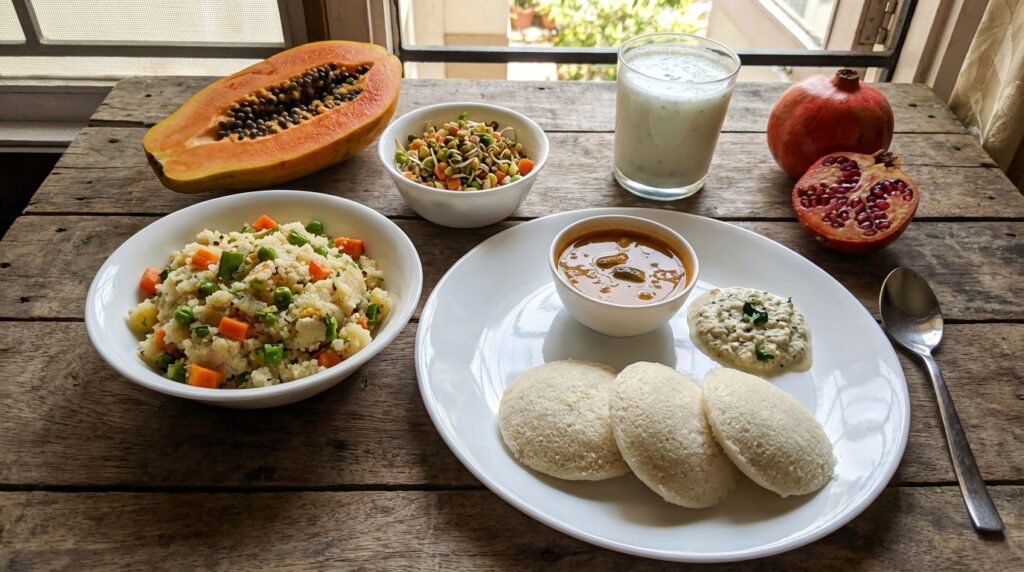
There is no single breakfast that works for everyone. Age, activity level, hormonal health, work schedule, and medical conditions all influence what your body needs in the morning. This is why understanding how to customise a Healthy Breakfast Indian plate based on personal goals is far more effective than blindly following generic diet plans.
Indian breakfasts are incredibly versatile. With small adjustments in portions, protein sources, and combinations, the same traditional foods can support weight loss, hormonal balance, diabetes management, or high-energy workdays. This section breaks down how to adapt a Healthy Breakfast Indian approach for different real-life needs.
Healthy Breakfast Indian for Weight Loss
Weight loss is not about eating less food; it is about eating food that keeps you full, stable, and metabolically supported. A Healthy Breakfast Indian plan for weight loss focuses on protein, fibre, and controlled carbohydrates.
What to prioritise:
- Higher protein portions
- Moderate carbohydrates
- Plenty of vegetables
- Limited added fats
Best Indian breakfast choices:
- Moong dal chilla with curd
- Protein poha with vegetables and sprouts
- Idli with extra sambar and minimal chutney
- Curd chana bowl with seeds
These options keep insulin levels stable and prevent mid-morning cravings. Skipping breakfast or eating carb-only meals often leads to overeating later in the day, which slows fat loss.
A Healthy Breakfast Indian pattern for weight loss should leave you comfortably full, not stuffed. Portion awareness matters more than food elimination.
Healthy Breakfast Indian for PCOD & Hormonal Balance
Women with PCOD or hormonal imbalance often struggle with irregular hunger, cravings, and energy fluctuations. A Healthy Breakfast Indian approach for PCOD should focus on blood sugar control, anti-inflammatory foods, and adequate protein.
What to prioritise:
- Protein at every breakfast
- Low to moderate glycemic load
- Fermented foods for gut health
- Healthy fats in controlled amounts
Best Indian breakfast choices:
- Moong dal chilla with curd
- Dosa with paneer or egg filling
- Protein poha with peanuts or sprouts
- Multigrain paratha with paneer bhurji
Hormonal health improves when the body feels safe and nourished. Extreme dieting, skipping breakfast, or consuming sugar-heavy meals increases stress hormones and worsens PCOD symptoms.
A consistent Healthy Breakfast Indian routine helps regulate insulin, cortisol, and appetite hormones over time.
Healthy Breakfast Indian for Diabetes & Insulin Resistance
For people managing diabetes or insulin resistance, breakfast plays a critical role in blood sugar control for the entire day. A Healthy Breakfast Indian plan here focuses on low glycemic impact, protein balance, and fibre intake.
What to prioritise:
- Protein-first meals
- High fibre vegetables
- Minimal refined grains
- Controlled portion sizes
Best Indian breakfast choices:
- Moong dal chilla with vegetables
- Curd chana bowl with seeds
- Idli with extra sambar and vegetables
- Multigrain paratha (small portion) with paneer
Skipping breakfast can worsen blood sugar fluctuations. Eating a balanced, Healthy Breakfast Indian meal helps prevent glucose spikes and improves insulin sensitivity.
It is not about avoiding carbs completely, but about pairing them correctly.
Healthy Breakfast Indian for Working Professionals
Busy schedules often push working professionals toward packaged or convenience foods. However, these options rarely provide sustained energy. A Healthy Breakfast Indian plan for professionals should focus on satiety, mental focus, and practicality.
What to prioritise:
- Easy-to-prepare meals
- Balanced macros
- Long-lasting energy
- Minimal sugar
Best Indian breakfast choices:
- Protein poha
- Curd chana bowl
- Idli–sambar
- Dosa with protein filling
These meals support concentration, reduce energy crashes, and prevent unhealthy snacking at work. A Healthy Breakfast Indian approach is far more effective than surviving on coffee and biscuits.
Healthy Breakfast Indian for Mothers & Homemakers
Mothers often put their own nutrition last, leading to fatigue, cravings, and hormonal imbalance. A Healthy Breakfast Indian plan for mothers should focus on energy, digestion, and nourishment.
What to prioritise:
- Adequate calories
- Protein for strength
- Gut-friendly foods
- Simple preparation
Best Indian breakfast choices:
- Multigrain paratha with paneer and curd
- Dosa with sambar
- Idli–sambar plate
- Curd chana bowl
Eating a proper breakfast improves mood, patience, and stamina throughout the day. A Healthy Breakfast Indian routine supports both physical and mental resilience.
Healthy Breakfast Indian for Fitness & Muscle Support
People who exercise regularly need breakfast to support muscle recovery and performance. A Healthy Breakfast Indian plan here should include higher protein and adequate carbohydrates.
What to prioritize:
- Protein-rich foods
- Balanced carbs
- Healthy fats in moderation
Best Indian breakfast choices:
- Paneer-stuffed dosa
- Multigrain paratha with paneer bhurji
- Moong dal chilla with curd
Protein timing matters. Skipping breakfast after workouts can slow recovery and increase muscle breakdown. A structured Healthy Breakfast Indian plate supports strength and endurance.
Portion Control: The Missing Link
Even the healthiest breakfast can backfire if portions are ignored. A Healthy Breakfast Indian approach emphasises the right portions, not food fear.
General portion guidelines:
- Grains: 1 moderate serving
- Protein: visible in every meal
- Vegetables: at least half the plate
- Fats: measured, not free-poured
Listening to hunger cues and adjusting portions based on activity level is essential.
Why Personalisation Matters More Than Perfection
No two bodies respond the same way to food. This is why copying someone else’s diet rarely works. A Healthy Breakfast Indian pattern should be personalised based on goals, digestion, and lifestyle.
Rigid rules create stress. Flexible structure creates results.
How MyFemily Helps You Personalise Indian Breakfasts
At MyFemily, the focus is on teaching people how to think about food, not just what to eat. Instead of one-size-fits-all meal plans, MyFemily helps individuals understand:
- How to adapt a Healthy Breakfast Indian plate to personal goals
- How to balance protein, carbs, and fats
- How to make Indian food work for weight loss and hormones
- How to build consistency without restriction
This education-first approach creates long-term success, not short-term results.
The Takeaway
A Healthy Breakfast Indian approach is not limited by goals — it adapts to them. Whether the aim is weight loss, hormonal balance, better blood sugar control, or sustained energy, Indian breakfasts provide the flexibility and nutritional depth to support it all.
The key is understanding, not avoidance.
Common Breakfast Mistakes Indians Make (And How to Fix Them)
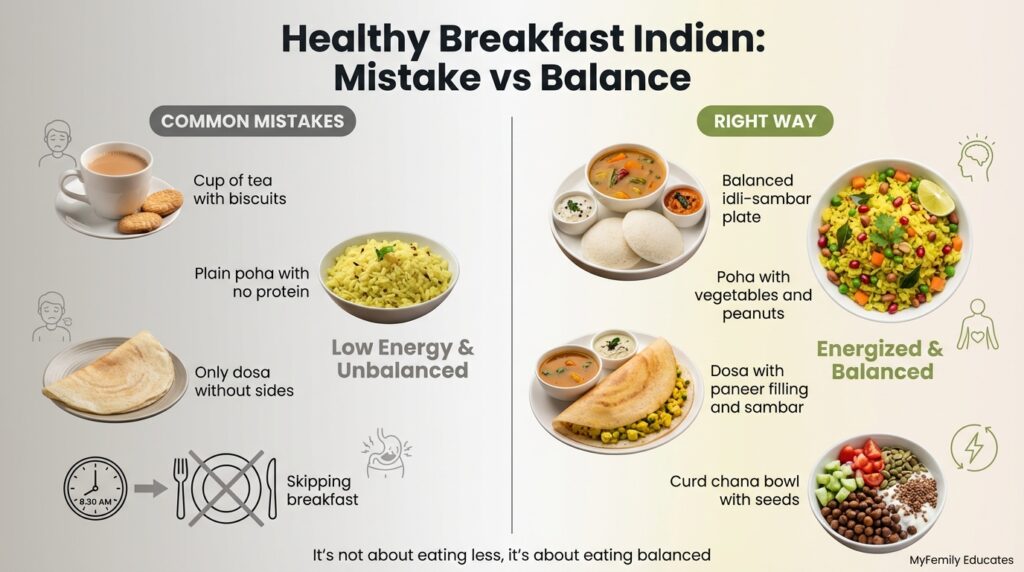
Many Indians believe they are eating a “good” breakfast simply because it is homemade or traditional. Yet, they still experience low energy, frequent hunger, weight gain, hormonal imbalance, or sugar fluctuations. The issue is rarely the food itself. More often, it is how the food is structured, combined, or repeated daily.
Understanding these mistakes is essential if you want a Healthy Breakfast Indian routine to actually support your health instead of just filling your stomach.
This section highlights the most common breakfast mistakes Indians make—and how to correct them practically.
Mistake 1: Carb-Only Breakfasts
One of the most common issues is eating breakfasts dominated only by carbohydrates. Examples include plain poha, plain upma, white bread, dosa without protein, or just fruits.
Carbohydrates are not the enemy, but when eaten alone, they digest quickly and spike blood sugar. This leads to:
- Early hunger
- Energy crashes
- Cravings for tea, sugar, or snacks
A Healthy Breakfast Indian plate always pairs carbs with protein and fibre. This slows digestion and keeps energy stable.
Simple Fix:
- Add sprouts, peanuts, paneer, dal, or curd
- Increase vegetables
- Reduce the portion of refined grains
Mistake 2: Skipping Protein in the Morning
Protein is the most ignored macronutrient in Indian breakfasts. Many people consume less than half of their daily protein requirement before noon.
Low-protein breakfasts lead to:
- Poor satiety
- Muscle loss over time
- Slow metabolism
- Increased cravings later in the day
A Healthy Breakfast Indian routine includes visible protein sources like dal, paneer, curd, chana, eggs, or sprouts.
Simple Fix:
- Ask: “Where is my protein?” before eating
- Add even small portions consistently
- Don’t wait until lunch for protein
Mistake 3: Tea + Biscuits = Breakfast
For many Indians, tea and biscuits have replaced a proper morning meal. While this feels light and convenient, it provides mostly sugar and refined flour with almost no nutrition.
This habit leads to:
- Blood sugar spikes
- Increased acidity
- Fatigue
- Mid-morning hunger
A Healthy Breakfast Indian approach treats tea as a beverage, not a meal.
Simple Fix:
- Eat breakfast first, then tea
- Replace biscuits with nuts or roasted chana
- Reduce sugar gradually
Mistake 4: Copying Instagram & Western Breakfast Trends
Smoothies, granola bowls, toast with spreads, or protein bars are often copied without understanding suitability. What works for someone in a different climate, culture, or lifestyle may not work for you.
Problems with blindly copying trends:
- Poor digestion
- Constant hunger
- Sugar overload
- Nutrient imbalance
A Healthy Breakfast Indian approach respects local food, digestion, and climate instead of chasing trends.
Simple Fix:
- Use Indian foods as the base
- Learn balance instead of copying
- Adapt trends, don’t replace tradition
Mistake 5: Fear of Traditional Fats
Ghee, coconut, peanuts, and seeds are often removed out of fear of weight gain. However, removing healthy fats can worsen cravings and hormonal imbalance.
Healthy fats:
- Support hormone production
- Improve satiety
- Help absorb fat-soluble vitamins
A Healthy Breakfast Indian plate uses fats in measured amounts, not zero.
Simple Fix:
- Use teaspoons, not tablespoons
- Avoid eliminating fats completely
- Focus on quality, not quantity
Mistake 6: Repeating the Same Breakfast Daily
Eating the same breakfast every day reduces nutrient diversity and can lead to boredom or deficiencies over time. Even healthy foods lose effectiveness when variety is missing.
A Healthy Breakfast Indian pattern thrives on rotation:
- Different grains
- Different protein sources
- Seasonal vegetables
Simple Fix:
- Rotate 3–4 breakfast options weekly
- Follow seasons
- Adjust portions, not just recipes
Mistake 7: Ignoring Portion Sizes
Even healthy foods can become problematic when portions are ignored. Large servings of paratha, dosa, or poha can overload calories and carbohydrates.
Portion blindness leads to:
- Weight gain
- Sluggish digestion
- Poor blood sugar control
A Healthy Breakfast Indian routine focuses on the right quantity, not restriction.
Simple Fix:
- Use the plate method
- Keep vegetables half the plate
- Protein should be clearly visible
Mistake 8: Skipping Breakfast to “Lose Weight”
Many people skip breakfast, believing it will speed up weight loss. In reality, skipping often backfires by increasing stress hormones and leading to overeating later.
Skipping breakfast may cause:
- Hormonal imbalance
- Increased cravings
- Poor concentration
- Fat storage
A Healthy Breakfast Indian meal supports metabolism instead of stressing it.
Simple Fix:
- Eat a small, balanced breakfast
- Focus on protein if appetite is low
- Don’t force heavy meals
Mistake 9: Not Adjusting Breakfast to Lifestyle
A manual labourer, an office worker, a student, and a homemaker all have different energy needs. Eating the same breakfast regardless of activity leads to an imbalance.
A Healthy Breakfast Indian plan adjusts based on:
- Activity level
- Work timing
- Health conditions
- Age
Simple Fix:
- Higher protein for active days
- Lighter meals for sedentary days
- Flexibility over rigidity
Why These Mistakes Persist
Most of these habits are passed down unknowingly or formed due to a lack of education. People are rarely taught how to build a balanced plate, only what to eat or avoid.
This is where nutrition education becomes essential.
How MyFemily Helps Correct These Breakfast Mistakes
At MyFemily, the goal is not to shame food habits but to teach structure and understanding. Many people already eat Indian food; they just don’t know how to balance it.
MyFemily helps people:
- Identify breakfast mistakes without guilt
- Understand portion control
- Add protein correctly
- Build a sustainable, Healthy Breakfast Indian routine
- Adapt food choices to personal goals
This education-first approach creates long-term health improvements instead of short-term fixes.
The Bigger Lesson
Most health issues don’t come from eating Indian food—they come from eating Indian food without balance or understanding. Once these common mistakes are corrected, breakfast becomes a powerful tool for energy, metabolism, and hormonal health.
A Healthy Breakfast Indian routine is not complicated; it simply needs awareness.
How to Build Your Own Healthy Breakfast Indian Plate (Daily, Practical & Sustainable)
By now, it’s clear that breakfast is not just a meal—it’s a daily health decision. You’ve seen why Indian breakfasts work, how they can be adapted for different goals, and what common mistakes to avoid. The final step is knowing how to build your own plate confidently, without confusion, fear, or dependence on diet trends.
This part focuses on practical application—how to design a Healthy Breakfast Indian plate that fits your lifestyle, budget, health goals, and schedule, and how MyFemily helps people turn this knowledge into lasting habits.
The Core Structure of a Healthy Breakfast Indian Plate
A Healthy Breakfast Indian plate always follows a simple structure, regardless of the dish:
- Carbohydrates (Energy Base)
- Protein (Stability & Satiety)
- Fibre (Digestion & Fullness)
- Healthy Fats (Hormones & Absorption)
You don’t need fancy foods or supplements. The power lies in how you combine everyday Indian ingredients.
Example structure:
- Grain (idli, poha, roti, dosa)
- Protein (dal, paneer, curd, chana, eggs, sprouts)
- Vegetables (any seasonal vegetables)
- Fat (ghee, coconut, nuts, seeds—measured)
This structure is the foundation of a Healthy Breakfast Indian approach.
Step-by-Step: Build Your Breakfast Plate at Home
Step 1: Choose ONE Carb Source
Carbohydrates are not bad; excess and imbalance are. Choose one primary carb source:
- Idli/dosa
- Poha / upma
- Roti/paratha
- Rice-based breakfast
Portion matters. One moderate serving is enough for most people.
Step 2: Add a Visible Protein Source
Protein is non-negotiable for a Healthy Breakfast Indian plate. Ask yourself:
“Can I see my protein?”
Good protein options:
- Dal or sambar
- Paneer or curd
- Chana or sprouts
- Eggs (if non-vegetarian)
Protein reduces cravings, stabilises blood sugar, and supports metabolism.
Step 3: Increase Fibre with Vegetables
Vegetables are often missing from breakfast, but they are critical for digestion and satiety.
Add:
- Vegetables to poha or upma
- Extra vegetables in sambar
- Vegetable stuffing in paratha
- Side salad or chutney with fibre
Fibre helps control appetite and supports gut health—key for anyone following a Healthy Breakfast Indian routine.
Step 4: Use Healthy Fats in Measured Amounts
Healthy fats support hormones and fullness, but quantity matters.
Use:
- 1 teaspoon ghee
- A small amount of coconut
- A few nuts or seeds
Avoid pouring fats freely. A Healthy Breakfast Indian plate uses fats strategically, not excessively.
How to Rotate Breakfasts Weekly (Very Important)
Eating the same breakfast daily limits nutrients and increases boredom. Rotation keeps the body responsive and habits sustainable.
Sample weekly rotation:
- Monday: Idli–sambar
- Tuesday: Protein poha
- Wednesday: Moong dal chilla
- Thursday: Dosa with protein filling
- Friday: Curd chana bowl
- Saturday: Multigrain paratha combo
- Sunday: Flexible/home-style breakfast
This keeps your Healthy Breakfast Indian routine interesting and nutritionally diverse.
Budget-Friendly Healthy Breakfast Indian Planning
Healthy eating doesn’t need to be expensive. Indian kitchens already have the ingredients.
Budget tips:
- Use seasonal vegetables
- Cook in bulk (sprouts, chana, dal)
- Avoid packaged “health” foods
- Focus on home cooking
A Healthy Breakfast Indian plan is one of the most cost-effective nutrition approaches available.
Eating Out or Travelling: Smart Breakfast Choices
Even when eating out, you can follow Healthy Breakfast Indian principles.
Good choices:
- Idli with sambar (extra sambar)
- Plain dosa with sambar
- Vegetable poha
- Curd-based meals
Avoid:
- Sugar-loaded items
- Fried-only breakfasts
- Tea + biscuits as a meal
Understanding structure helps you make better decisions anywhere.
Signs Your Breakfast Is Working for You
A Healthy Breakfast Indian routine is effective if:
- You feel full for 3–4 hours
- Cravings reduce
- Energy remains stable
- Digestion improves
- Mood and focus are better
If these are missing, adjust portions or protein—do not eliminate food.
Why Consistency Matters More Than Perfection
Health improves through daily repetition, not extreme discipline. Missing a day or eating differently once in a while does not undo progress.
A Healthy Breakfast Indian approach works best when:
- Followed most days
- Adjusted, not abandoned
- Matched to real life
Consistency builds metabolic confidence and trust in your body.
How MyFemily Helps You Apply This in Real Life
Many people know what to eat but struggle with how to apply it consistently. This is where MyFemily plays a critical role.
MyFemily helps individuals:
- Understand Indian food without fear
- Build balanced breakfast plates confidently
- Adjust meals for weight loss, PCOD, diabetes, or energy
- Break diet myths and confusion
- Create habits that fit work, family, and culture
Instead of restrictive plans, MyFemily focuses on education, personalisation, and sustainability—so people stay fit without feeling deprived.
Final Thoughts: Breakfast as a Daily Health Investment
A Healthy Breakfast Indian routine is not about perfection, rules, or trends. It is about respecting your body, culture, and lifestyle. Indian breakfasts are not outdated—they are powerful when understood correctly.
Your body doesn’t need imported solutions. It needs balanced nourishment, consistency, and understanding.
When you start your day with the right breakfast, everything else becomes easier—energy, focus, digestion, and long-term health.
Final Takeaway
Eat Indian food.
Eat it balanced.
Eat it with understanding.
That’s the real secret behind a Healthy Breakfast Indian lifestyle.